
Blog
Negative Pressure Wound Therapy Designed Around the Realities of Wound Care
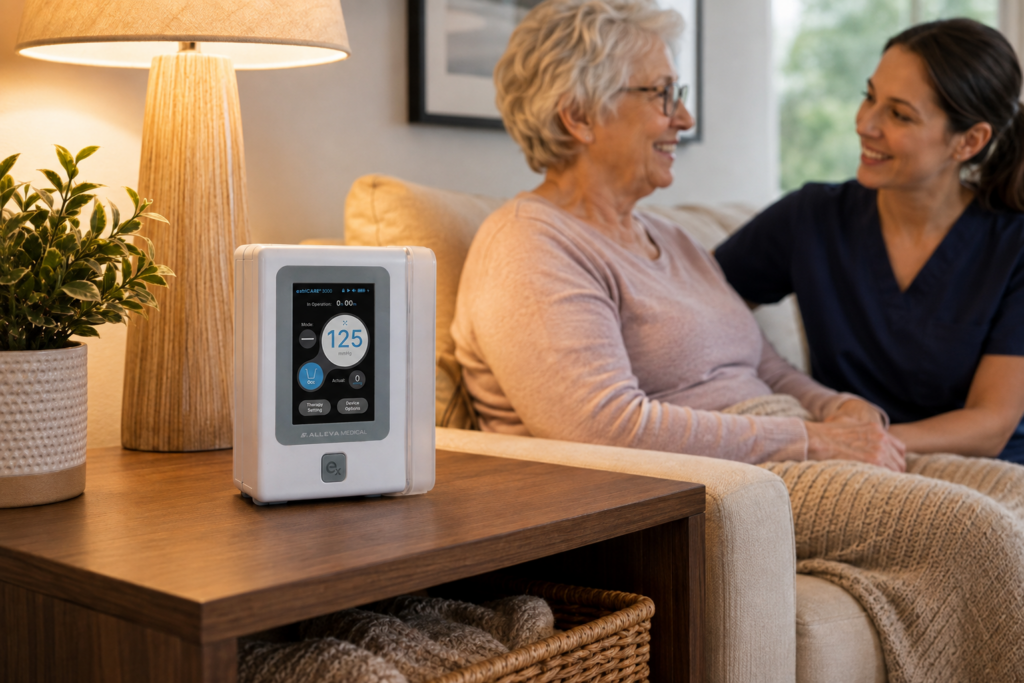
Negative pressure wound therapy (NPWT) can play an important role in the management of a wide range of wounds, but successful therapy involves more than simply delivering negative pressure.
Clinicians also need equipment that supports efficient setup, clear monitoring, reliable operation, and flexibility across different wound care environments. The extriCARE® 3000 Negative Pressure Wound Therapy System was designed with those everyday demands in mind.
Lightweight, quiet, and equipped with an intuitive touchscreen interface, the extriCARE 3000 combines established NPWT functionality with intelligent pressure management and therapy data capabilities designed to give clinicians greater visibility into treatment.
A Versatile NPWT System for a Range of Wound Types
The extriCARE 3000 generates negative pressure, or suction, to remove wound exudate, infectious material, and tissue debris from the wound bed.
It is indicated for use with:
- Chronic wounds
- Acute wounds
- Traumatic wounds
- Subacute and dehisced wounds
- Partial-thickness burns
- Ulcers, including diabetic and pressure ulcers
- Flaps and grafts
That range of indications makes versatility an important part of the device’s design.
The extriCARE 3000 provides a pressure range of 20 to 140 mmHg and offers both continuous and intermittent therapy modes, allowing clinicians to select therapy settings according to the patient’s prescribed treatment plan.
Intelligent Pressure Adjustment for Gradual, Gentle Suction
One of the distinguishing features of the extriCARE 3000 is its intelligent pressure sensing and adjustment.
Using proprietary algorithms, the pump makes pressure adjustments designed to provide gradual and gentle suction, supporting patient comfort while maintaining prescribed therapy.
For clinicians, that means the technology operating behind the therapy is designed to respond intelligently while keeping the user experience straightforward.
Rather than adding complexity to NPWT, the goal is the opposite: provide sophisticated functionality through a system that remains simple to operate.
A Touchscreen Designed for Quick, Clear Interaction
Medical devices are used in busy environments, often while clinicians are wearing gloves and managing multiple aspects of patient care.
The extriCARE 3000 incorporates a 3.5-inch high-resolution resistive touchscreen that can be operated with gloved or bare hands and even through the clear panel of its carrying case.
The primary therapy screen prominently displays treatment information, including prescribed pressure and operating status. Pressure adjustments and changes to vacuum mode can be completed directly through the touchscreen.
The interface is also designed to make troubleshooting easier.
When the system identifies an error, the device displays a large on-screen message along with a suggested action to address the issue. A red LED indicator provides an additional visual alert. The examples shown in the product materials include straightforward messages for issues such as a missing canister or a severe blockage.
That type of visibility can help clinicians identify what the system is communicating without having to decipher an ambiguous alarm.
More Visibility Into Therapy Usage
The extriCARE 3000 also introduces data capabilities that expand what clinicians can review from the device.
The system includes an on-screen usage log with date and time stamps, providing a reference of device activity when needed. It can also track exudate levels and usage data that can be exported to a computer for analysis through a data dashboard.
According to the product materials, this ability to store exudate collection time and usage data is a first within the extriCARE family.
In wound care, where therapy may extend across days and involve multiple caregivers, having access to a documented usage history can provide another layer of information for the care team.
Built for Different Care Environments
Portability also matters in NPWT.
The extriCARE 3000 weighs approximately 1.37 pounds and measures approximately 4 inches long by 3.1 inches deep by 5 inches high. The system uses a rechargeable lithium battery and is designed for long-lasting battery operation.
Two canister sizes are available:
- 100cc canister: A smaller collection option that can support greater portability.
- 400cc canister: A larger-capacity option when additional exudate collection volume is needed.
Dedicated carrying cases are available for both canister configurations, along with accessories including a charger.
Together, these options allow the system to be configured for different treatment environments and patient needs.
Keeping Advanced Therapy Practical
Wound care technology becomes most useful when it fits naturally into clinical workflows.
The extriCARE 3000 was designed to bring several important elements together in one NPWT platform:
- Intelligent pressure sensing and adjustment
- A wide 20–140 mmHg pressure range
- Continuous and intermittent therapy modes
- A clear, glove-compatible touchscreen
- Straightforward error notifications
- On-screen usage logs
- Exudate and therapy data tracking
- 100cc and 400cc canister options
- A lightweight, quiet design
For healthcare organizations evaluating NPWT systems, those details can matter just as much as the therapy itself.
The extriCARE 3000 is designed to deliver negative pressure wound therapy while making the technology surrounding that therapy easier to operate, monitor, and incorporate into day-to-day wound management.
Learn More About the extriCARE® 3000
Whether you’re evaluating NPWT technology for your organization or looking for a system designed to balance performance, portability, and usability, the extriCARE 3000 offers a versatile approach to negative pressure wound therapy.
Explore the extriCARE 3000 and connect with extriCARE USA to learn more about product availability, accessories, and implementation.
